

Autumn Tea Guide: Warm Spiced Brews for Cooler Days
The first cold morning arrives without warning. You reach for the kettle before anything else, and the iced tea you drank all summer suddenly feels wrong. Autumn asks for cinnamon, clove, and ginger, the spices that make a kitchen smell like a Sunday afternoon.
Spiced tea is forgiving. No special blend required: a jar of cinnamon sticks, a knob of ginger, and a decent black tea will get you most of the way. What follows is what to keep on the shelf, which teas hold up to spice, three brews worth making this week, and how to mix your own autumn blend.
Start With the Spice Shelf
Whole spices beat ground ones in tea. They release flavor slowly, strain out cleanly, and never leave grit at the bottom of the mug. Six spices cover almost everything you will want between October and February:
- Cinnamon. Ceylon is softer and more floral; cassia is the stronger, sweeter stick most shops sell. One stick per two cups is a good start.
- Cloves. Loud and slightly numbing. Two or three per pot, no more, or everything else disappears.
- Ginger. Fresh is bright and sharp; ground is warmer and rounder. One inch, sliced thin, suits two mugs.
- Cardamom. Green pods, cracked with the flat of a knife so the seeds inside can breathe.
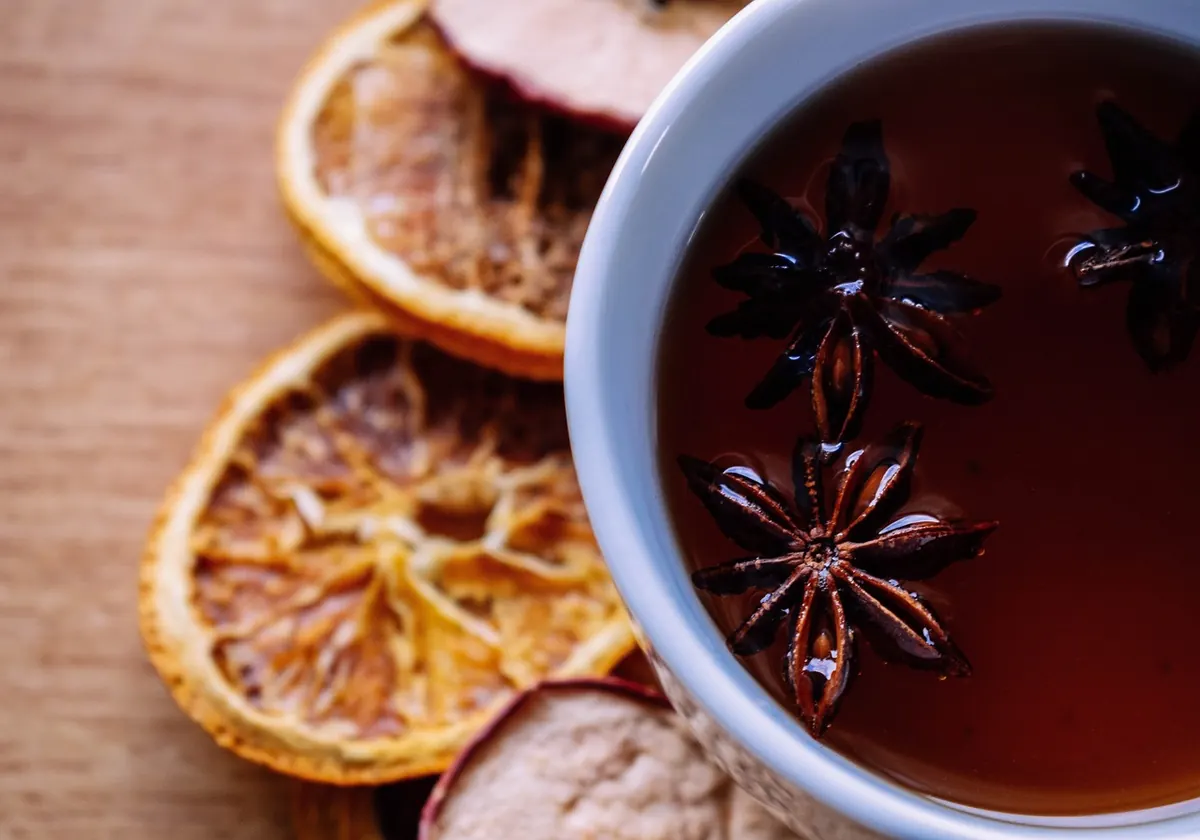
- Star anise. One pod per pot. It tastes like licorice and looks good in a glass cup.
- Black peppercorns. A few, cracked. This is what makes chai taste like chai instead of dessert.
Toast whole spices in a dry pan for thirty seconds before brewing. Wait for the smell, then stop.
Buy in small quantities. Whole spices fade after roughly a year, and a jar that has been sitting open at the back of a cupboard since some forgotten winter will taste like dust and nothing else. Buy loose, by weight, from a shop that moves its stock; you will pay less for something worth using. Keep them in a dark cupboard away from the stove, and write the month on the lid when you open them.
One piece of equipment earns its place here: a small fine-mesh strainer, or a teapot with a roomy infuser basket. Cloves and cardamom pods will not slip through most tea strainers, but peppercorns and shreds of ginger will, and fishing them out of a mug with a spoon is nobody's idea of a good morning.
Pick a Tea That Can Stand Up to Spices
Delicate teas lose. A first-flush Darjeeling or a silver needle white will be flattened by a cinnamon stick, so save those for plain cups. Choose something with weight: Assam or English breakfast for malt and body; Ceylon or Kenyan black when you want the spices to lead; roasted oolong, which is excellent with star anise and maple; pu-erh, earthy and deep, for a genuinely cold night; rooibos or honeybush, caffeine-free and naturally sweet, for anything after eight in the evening.
Think about which one you want to taste. If the spice is the point, use a straightforward black tea as a base and let the cinnamon take the lead. If the tea is the point, cut the spice back and pick something with character of its own, like a smoky lapsang souchong with a single star anise, or a malty Assam with nothing but a slice of ginger. Both are excellent, and they are not the same drink.
Water temperature matters more than most people think. Black tea and pu-erh want water just off a rolling boil, roughly 95 to 100°C (203 to 212°F). Roasted oolong sits near 90°C (195°F), rooibos is happy with boiling water, and green tea, at 75 to 80°C (165 to 175°F), rarely plays well with heavy spice anyway.
Rule of thumb for a balanced pot: one strong spice, one supporting spice, one aromatic. Cinnamon, ginger, cardamom. Or star anise, clove, black pepper. Reach for five or six at once and the cup turns muddy.
Three Brews for Cooler Days
Cinnamon-Clove Chai, Stovetop
This makes two generous mugs and is the recipe to learn first.
You will need: 2 cups water, 2 cups milk or oat milk, 2 tablespoons loose Assam (or 4 tea bags), 1 cinnamon stick, 3 cloves, 3 green cardamom pods, a 1-inch piece of ginger, 4 black peppercorns, and sugar or honey to taste.
- Combine the water and all the spices in a saucepan. Bring to a boil, lower the heat, and simmer for 5 minutes.
- Add the tea and simmer for 3 minutes more. Do not let it boil hard, or the tannins turn the cup bitter.
- Pour in the milk and heat gently until steam rises. Take the pan off the heat the moment it threatens to climb the sides.
- Strain into mugs, sweeten to taste, and drink it hot.
Note: for a stronger brew, simmer the spices longer before the tea goes in. The spices keep giving; the tea does not.
Maple and Star Anise Oolong
Lighter and a little stranger than chai, and the one to make when the afternoon needs a lift.
You will need: 2 cups water at about 90°C (195°F), 2 teaspoons roasted oolong, 1 star anise pod, a strip of orange peel, and 1 teaspoon maple syrup per mug.
- Warm a teapot, then add the oolong, star anise, and orange peel.
- Pour the water over and steep for 3 to 4 minutes. Taste at 3.
- Strain into mugs and stir the maple syrup into each one.
The orange peel is not decoration. Its oil cuts through the licorice sweetness of the anise, which on its own can drift toward cough syrup.
Ginger-Lemon Rooibos
Caffeine-free, so it works at ten at night.
You will need: 2 cups boiling water, 2 teaspoons rooibos, a 1-inch piece of ginger sliced thin, 3 black peppercorns, and a squeeze of lemon with honey to finish.
- Put the ginger and peppercorns in a small saucepan with the water. Boil for 3 minutes.
- Add the rooibos, cover, and take the pan off the heat. Steep for 5 minutes.
- Strain, then add the lemon and honey in the mug rather than the pot. Lemon goes flat and bitter if it sits in hot water.
Build Your Own Autumn Blend
A house blend takes ten minutes and pays off all season. The formula is simple: a base tea, two or three whole spices, and sometimes a dried fruit or peel for sweetness.
- Choose a base. Assam for a malty everyday cup, Ceylon for something brighter, rooibos for evenings.
- Add spice in proportion. For every 4 tablespoons of tea, use 1 broken cinnamon stick, 6 cloves, 6 cracked cardamom pods, and 1 star anise. Adjust from there.
- Add sweetness or citrus. A tablespoon of dried orange peel, or a few pieces of dried apple.
- Taste before you commit. Brew one cup from a spoonful of the mix. If it needs more, add a little; if it tastes muddy, you used too many kinds of spice.
- Store in a sealed jar away from light, and use it within two months.
Spiced Honey Syrup and Other Shortcuts
If you drink spiced tea often, make a syrup. Simmer 1 cup honey or sugar with 1 cup water, 1 cinnamon stick, 3 cloves, 3 cardamom pods, and a slice of ginger for 10 minutes. Strain into a clean jar; it keeps in the fridge for about three weeks. A spoonful turns plain black tea into something that tastes like an afternoon's work, and it sweetens a cup without leaving spice grit behind.
Other shortcuts worth knowing:
- Cold spiced tea is just as good. Brew the chai recipe, strain it, chill, and pour over ice with a splash of milk.
- A thermos holds heat for hours, but strain the spices out first. They keep steeping in the flask and the last cup will be harsh.
- Reheat milk-based brews only once. The milk separates and the tea turns bitter the second time around.
- Keep delicate teas plain. If you want spice with green tea or a white, serve it iced with ginger and honey instead.
Autumn tea is less a recipe than a habit. Once the spices are on the shelf and the kettle is on, the rest is just a matter of leaning into the season, one warm mug at a time.
Photo: ValeriaLu / Pixabay